

The “Missing Minutes” of Narcolepsy

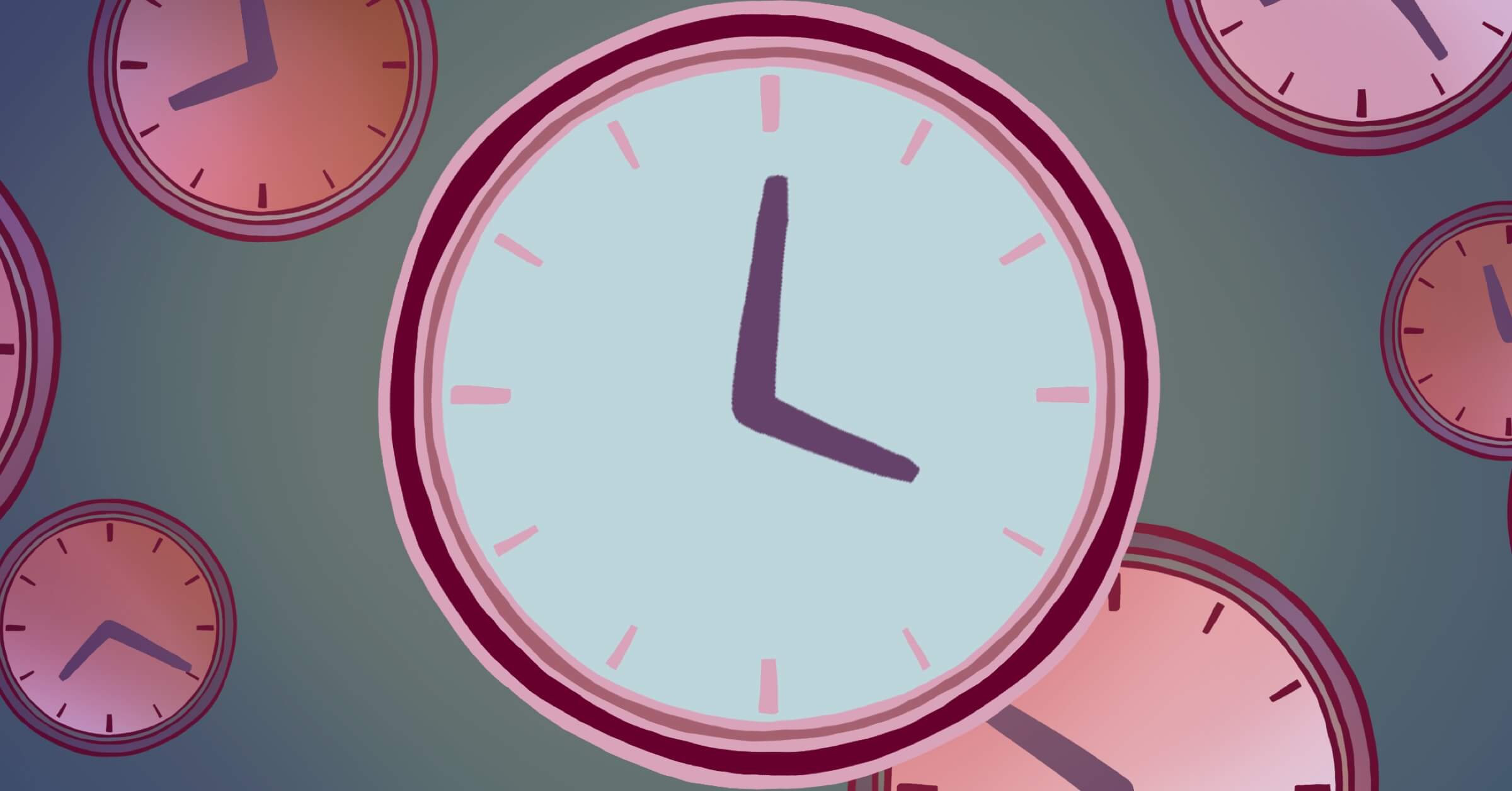
I stared at the time on my laptop screen. It read 3:55 pm. That could not be right. Where had the last 20 minutes gone? I looked around the office in a daze while my colleagues carried on working as if no time had passed at all.
I looked at the time again and realized there was nothing I could do.
I could not exactly turn to my colleagues and ask, “Hey, is it me or did time just speed up?”
It was yet another moment when I lost minutes of my life and had no way to explain where they had gone.
That is narcolepsy for me: gaps, broken transitions, and missing minutes.
The worst part of narcolepsy
People usually look confused when I tell them that, for me, falling asleep is not the worst part of narcolepsy.
Narcolepsy does not only steal wakefulness. For me, at least, some of its other symptoms can be far harder to live with than the sleepiness people tend to focus on.

One of them became especially noticeable just before I was diagnosed. I think of it as the “missing minutes.” It is much more than forgetfulness or an ordinary memory lapse.
Narcolepsy has a way of fracturing continuity, leaving us with missing transitions, blurred memory, and the unsettling distress of piecing together a day we do not fully remember living.
There are moments in my life that, to this day, I still question. I do not know whether they were real or whether I dreamt them.
As I have been writing this, I have realized how much of my life I spent forcing myself to focus:
- Trying to stay awake.
- Trying to control my cataplexy.
- Trying to steady my vision.
- Trying to retrieve my memories
- Trying, more than anything, to simply stay present.
It is an exhausting way to live.
You would think that would be hard enough, but it is not.
Narcolepsy has many layers
On top of all that, there is the helpless frustration of trying to convince yourself that you are still in control.
In a strange way, I find narcolepsy fascinating for this exact reason: science still has far more to understand about it, and society understands even less.
The people living with it know just how deeply sleep shapes memory, function, emotion, and the basic experience of being human.
People really do not get that.
Most of the time, people assume you are rude, bored, or careless. Half the time, I cannot even blame them, because I am often the first to downplay it, laugh it off, or make myself the punchline.
It is shame that makes me do that.
Shame often is a symptom of narcolepsy
Even though I know this is simply a symptom of a chronic illness, the shame still takes over.
No matter how you frame it, it is hard to ask people to rely on someone who cannot always rely on themselves.
The hardest part is not always the sleep itself. Sometimes, it is the fractured continuity.
The sense that parts of your life have gone unrecorded, unwitnessed, and unexplained. That is what people miss when they reduce narcolepsy to tiredness.
They do not see the missing minutes, or what it costs to keep stitching yourself back into a day that would not hold still.
Join the conversation